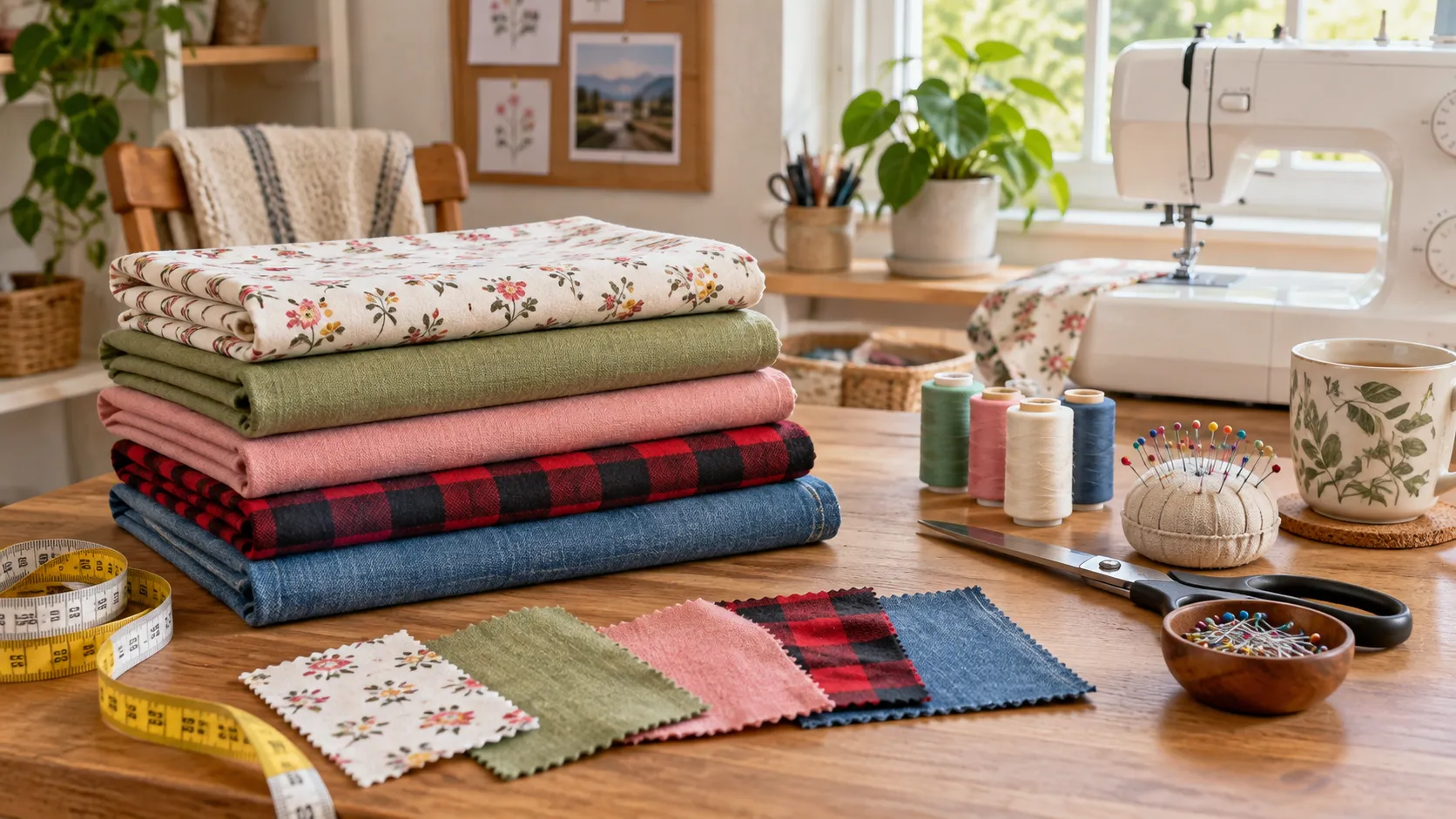
Choosing fabric is one of the first decisions you make when starting a sewing project, and it can have a big effect on how easy the project feels. Some fabrics stay flat, cut cleanly, and move smoothly under the presser foot. Others stretch, slip, fray, or shift enough to make basic sewing harder than it needs to be.
For beginners, the best approach is to start with stable fabrics that are easy to control. You can then focus on straight seams, accurate cutting, pressing, and simple construction instead of constantly correcting the material.
What Makes a Fabric Beginner-Friendly?
A beginner-friendly fabric should hold its shape well while you work with it. Stable woven fabrics are usually easiest because they do not stretch much and are less likely to move while being cut or stitched.
Medium or light-medium weights are especially helpful. Very thin fabrics can bunch, while very thick fabrics may be harder to feed through a home sewing machine. When browsing fabric for sewing and quilting, look for materials that feel stable in your hands and do not shift too easily when folded or pinned.
Cotton Is Usually the Easiest Place to Start
Cotton is one of the most practical fabrics for a new sewer. It is easy to cut, press, pin, and sew, and it works well for many simple home projects. Quilting cotton is especially beginner-friendly because it stays in place while you work. It is a good choice for tote bags, pillow covers, aprons, and fabric baskets.
Cotton poplin is another useful option. It has a smooth surface and slightly lighter feel, making it suitable for simple shirts, skirts, and lightweight home accessories. Prewashing is important because cotton can shrink. Washing and drying it before cutting helps reduce changes after the finished item is cleaned.
Flannel Is Soft and Forgiving
Flannel is another good fabric for beginner projects because it is soft, stable, and relatively easy to control. Its slightly brushed surface gives it some grip, which helps layers stay together while sewing.
It works well for pajama bottoms, blankets, scarves, simple shirts, and cozy home projects. Flannel should usually be prewashed because it may shrink, and its edges can fray, so a basic seam finish may help.
Chambray Gives You a Denim Look Without the Bulk
If you like the look of denim but do not want to deal with heavy fabric yet, chambray can be a useful alternative. Chambray is lighter and easier to feed through a home sewing machine than traditional denim. It remains stable enough for beginners while still giving garments a casual, structured appearance.
It works well for simple shirts, skirts, dresses, and lightweight bags. Prewashing is a good idea, and pressing seams as you sew can improve the finished result.
Linen and Linen Blends Can Be Beginner-Friendly
Medium-weight linen is often manageable for beginners because it is stable, presses well, and works nicely for relaxed clothing and home sewing. Linen blends can be even easier because they often wrinkle less while keeping much of linen's breathable feel and natural appearance.
Good beginner projects include drawstring bags, loose tops, aprons, and simple elastic-waist garments. Avoid loosely woven linen at first because it can shift and fray easily.
Muslin Is Excellent for Practice
Muslin is useful when you want to practice a technique before using more expensive fabric. It is commonly used for test garments, pattern fitting, and general sewing practice.
Because plain cotton muslin is inexpensive and easy to mark, you can use it to practice seams, darts, hems, or pattern adjustments without worrying about wasting your final material.
Stable Knits Are a Good Next Step
Stretch fabrics can be difficult for complete beginners, but double knit and ponte are more stable than lightweight jersey. They can be useful when you are ready to try fabric with some stretch.
Use the correct needle when sewing knits. A ballpoint or stretch needle is often a better choice than a standard universal needle. Keeping a selection of sewing machine needles makes it easier to match the needle to the fabric instead of using one type for every project.
Fabrics Beginners May Want to Avoid at First
Some fabrics are beautiful but can make early projects unnecessarily difficult. Silk, satin, and chiffon tend to slip while cutting and stitching. Lightweight jersey can stretch out of shape, while very heavy denim and canvas may require stronger needles and more machine power. Fabrics with complex stripes or checks can also create extra work because they require careful pattern matching.
There is nothing wrong with using these materials later. Starting with easier fabrics simply gives you time to learn basic control and construction first.
Match the Fabric to the Project
Even an easy fabric can become frustrating if it is not suitable for the pattern. Before buying material, check the fabric recommendations on the pattern. A structured tote bag needs a different fabric than a flowing top, and a fitted knit shirt behaves differently from a woven blouse.
For a first project, choose something with few pattern pieces and mostly straight seams. Tote bags, pillowcases, aprons, simple skirts, and fabric storage baskets are all useful options.
Final Thoughts
The best fabric for beginner sewing is usually one that stays stable, cuts cleanly, and does not require special handling. Cotton, flannel, chambray, muslin, medium-weight linen, and stable knits all provide useful starting points.
Take time to prewash your fabric, use the right needle, press as you go, and test a few stitches on a scrap before starting the final piece. These simple habits make sewing easier and help you build confidence project by project.
Responses
Join the conversation
Sign in to share your thoughts and interact with the author.
Sign In to Comment