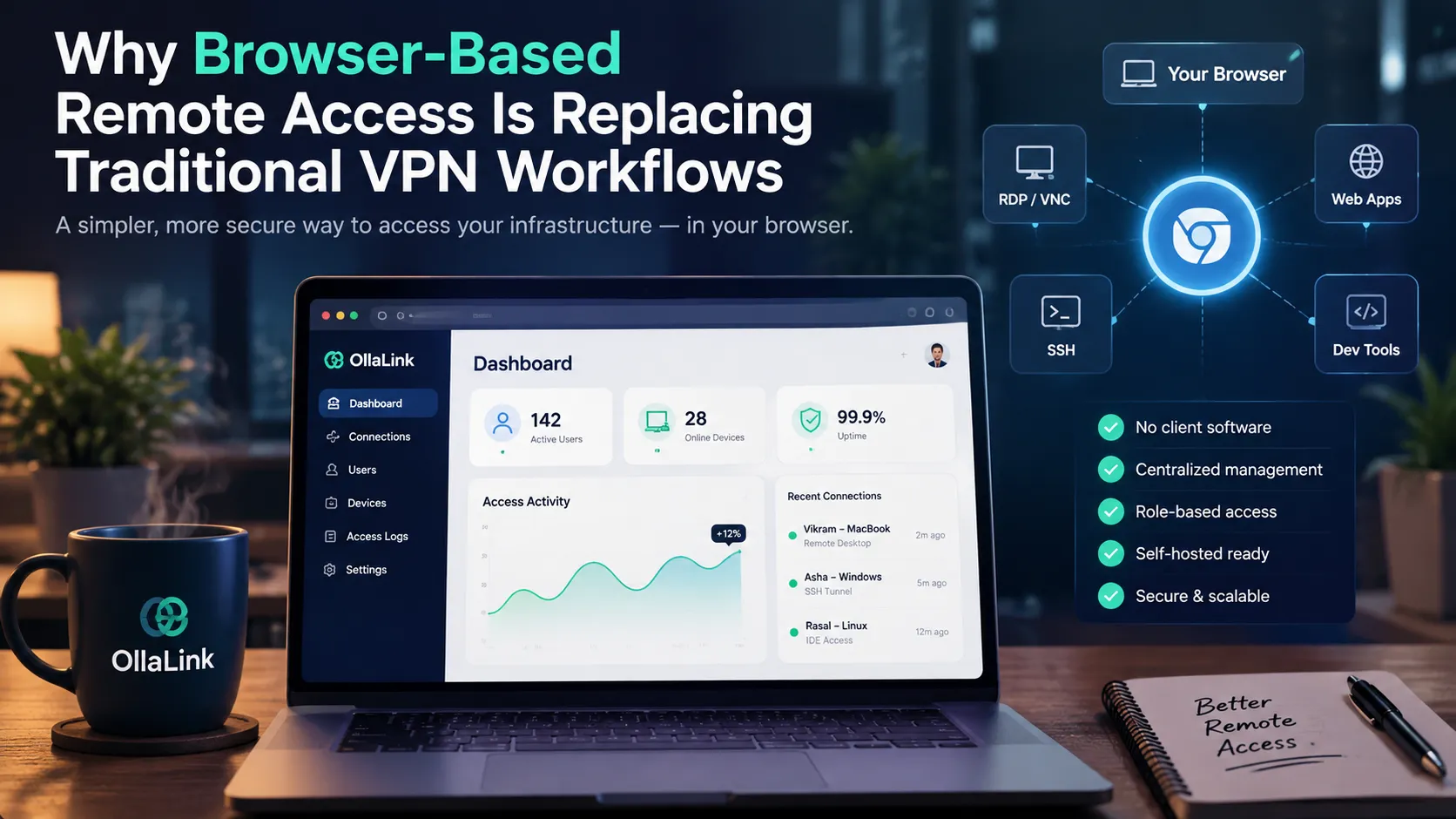
Remote work has changed the way organizations manage infrastructure. While Virtual Private Networks (VPNs) have been the standard for years, many IT teams are now looking for simpler and more scalable alternatives.
Browser-based remote access is becoming increasingly popular because it reduces deployment complexity while maintaining secure connectivity.
Why Traditional VPNs Create Challenges
VPNs work well, but they often require:
- Client software installation
- Manual configuration
- Firewall adjustments
- Ongoing maintenance
- Additional support for remote users
As organizations grow, these administrative tasks can quickly become difficult to manage.
Browser-Based Access Changes the Workflow
A browser-first approach removes many of these obstacles.
Instead of installing software on every device, users authenticate through a secure web browser and access only the resources they are authorized to use.
Benefits include:
- Faster onboarding
- Reduced maintenance
- Better cross-platform compatibility
- Centralized administration
- Easier scalability
What to Look for in a Modern Remote Access Platform
When evaluating solutions, I usually focus on:
- Secure authentication
- Role-based permissions
- Session management
- Device management
- Self-hosted deployment
- Browser compatibility
These capabilities help simplify day-to-day infrastructure management without compromising security.
Exploring OllaLink
While researching modern remote access platforms, I explored OllaLink, which focuses on browser-based and self-hosted remote access for IT teams.
Useful resources:
🌐 Website
https://ollalink.com/
📦 Product
https://ollalink.com/product/
📖 Documentation
https://ollalink.com/docs/
💰 Pricing
https://ollalink.com/pricing/
Final Thoughts
Modern infrastructure should reduce operational complexity rather than add more configuration overhead.
Browser-based remote access is one of the most practical improvements I've seen for organizations that need secure, scalable, and easier-to-manage remote connectivity.
Responses
Join the conversation
Sign in to share your thoughts and interact with the author.
Sign In to Comment