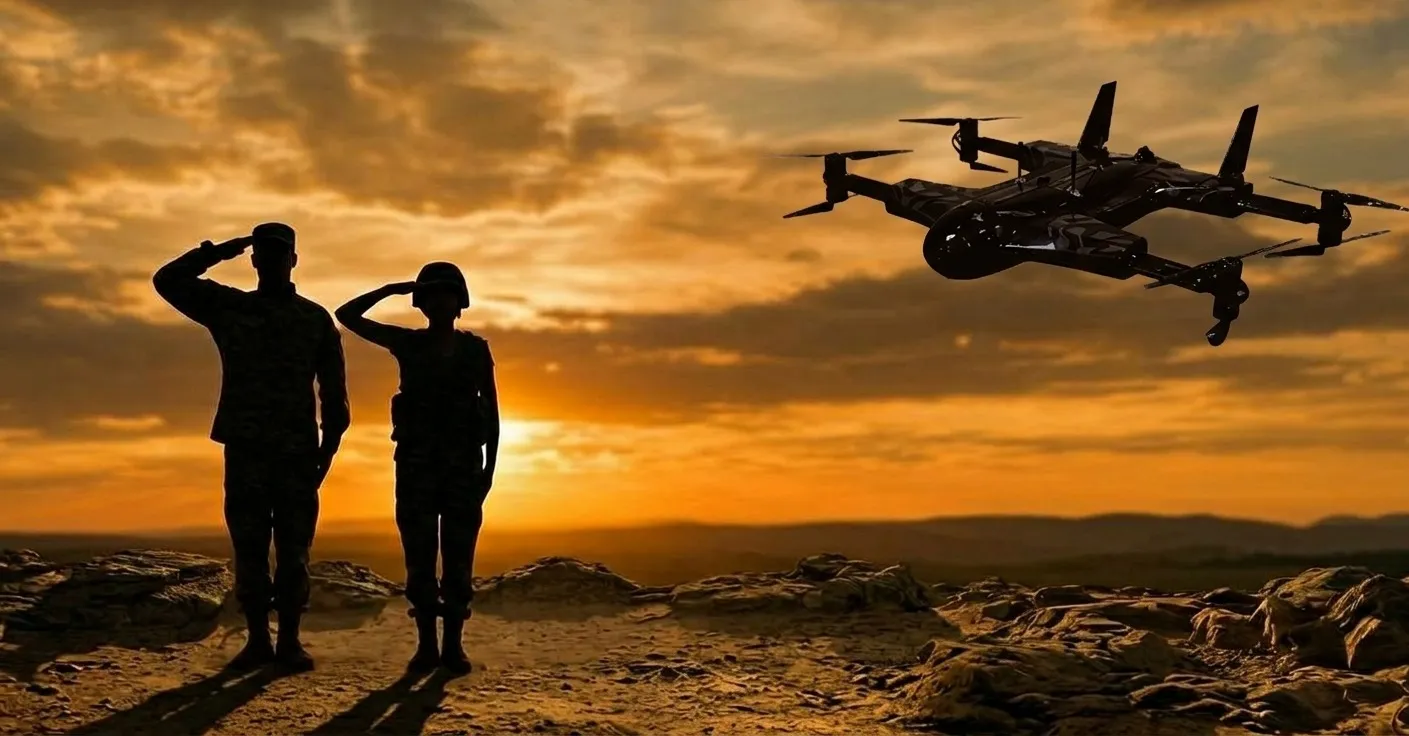
Drones are everywhere now. Farms use them, utilities use them, police use them, and so do militaries. The flip side is that anyone can buy one, which means facilities need a way to deal with the ones that shouldn't be there. Military drone defense is where a lot of the detection, AI, and automated response work is happening, but the same tools are finding their way into airports, power plants, factories, and other civilian sites.
For a long time, watching the sky meant a person staring at a screen. Trained operators still matter, but there are simply more drones in the air than there used to be, and they move fast. Nobody can watch every feed all day without missing something. AI and automation take over the grunt work: sorting through sensor data, spotting odd activity, following objects, and getting a recommendation in front of a human sooner.
Understanding Modern Drone Defense Systems
The industry term is counter-unmanned aircraft system, or C-UAS. The job is to detect, identify, track, and respond to an unauthorized drone, if permitted by law.
No single sensor does all of that well, so most setups mix several. Radar picks up things moving through the air. RF sensors listen for the link between a drone and its pilot.
Spotting something in the sky is the easy part. The system also has to decide if it's really a drone, see how it's moving, judge whether it's a risk, and tell the operator something useful. That's the stage where AI starts to earn its keep.
How AI Improves Drone Detection
A typical platform pulls in radar returns, camera footage, RF readings, sometimes acoustic data too. Each source sees the world a bit differently. Say radar picks up a small object moving across a field. Radar alone might not say what it is. A camera nearby could show its shape, and an RF sensor might catch a control signal that matches a known drone.
Sensor fusion is what ties those clues together. Rather than having an operator flip between screens and compare notes, the software lines up the data and builds one picture. Detection gets more accurate, and the operator has less to wade through.
AI-Based Object Classification
Finding something is only step one. Next the system has to say what it is. Computer vision handles a lot of that. Models trained on thousands of images and clips of drones, in all sorts of weather and lighting, learn to tell a quadcopter from a bird, a plane, or a passing vehicle. With more data, they can get better over time.
Shape isn't the only clue. Speed, flight path, and the way something moves all count. Birds flap and drift in ways that drones don't, for instance.
Automated Drone Tracking
After a drone has been identified, the next job is keeping eyes on it. Drones can turn, climb, or speed up in a second. Tracking has to keep pace, updating the position continuously. Automated tracking does that, following the aircraft and watching how its path changes.
Context changes how much attention a drone deserves. One heading toward a restricted area needs a closer look than one flying away. A drone that keeps circling a sensitive site is a different story again, and the system can raise its level of monitoring when it sees that. Best of all, nobody has to steer the sensors by hand the whole time.
The Role of Automation in Threat Assessment
The software can weigh where the drone is, which way it's going, how high and fast it's flying, how close it is to protected zones, and how it's behaved so far. From there it can sort events by urgency. A drone far from the site gets low priority. One approaching a restricted zone moves up to medium. One that actually enters the protected area triggers a high-priority alert.
That helps security teams put their energy where it counts. It doesn't have to mean taking people out of the loop, though. The approach that tends to work best is human-supervised automation: the AI does the repetitive analysis, and trained staff make the calls that matter.
Multi-Sensor Data and Situational Awareness
Good drone defense rarely comes from one data source. Radar gives position and movement. RF detection picks up communication signals. Cameras give a visual check, and thermal sensors help after dark or in poor visibility.
AI joins these into a single view of the airspace. When one sensor has gaps, another can fill them. Picture a drone that slips behind a building. The camera loses it, but radar doesn't, so the system holds the track and picks the visual back up when the drone reappears.
Predictive Analysis and Drone Behavior
AI can do more than say where a drone is right now. It can also make an educated guess about where it's headed.
By studying past flight paths, speed, heading, and altitude changes, predictive models help operators judge whether a drone is making for a particular spot or just passing through. That's handy when you're covering a large site or a cluttered environment.
Still, a prediction is only a guess. Drones change course for plenty of reasons: a pilot's input, wind, a technical fault, or a pre-programmed route. So the forecast should back up human judgment, not stand in for it.
Automation and Faster Response
Done manually, the steps add up. Someone notices an object, checks several feeds, decides it's a drone, works out where it is, and only then decides what to do. A modern system can do the first several of those on its own: detect, classify, track, raise an alert, and hand the operator the relevant details. That leaves people free to assess the situation and respond.
What the response looks like depends on the setting and the rules that apply. It could be as simple as watching and notifying someone, or it could involve authorized countermeasures. Active countermeasures need tight control, since jamming communications or navigation can affect other aircraft, nearby people, and infrastructure.
Applications Beyond Military Environments
Drone defense clearly has a place in defense and security work, but it doesn't stop there.
Airports can use detection to keep tabs on restricted airspace. Industrial sites can watch sensitive areas, and energy operators can spot unauthorized flights over their infrastructure. Public safety teams can lean on it during big events or emergencies. Construction sites and large commercial properties can get value from automated aerial monitoring as well.
Commercial drones are cheap and easy to get, so you don't have to run a military base to end up with an unexpected drone overhead.
Conclusion
AI and automation are reshaping how drone defense handles detection, identification, tracking, and monitoring. Pulling data from several sensors and analyzing it as it arrives gives security teams a clearer picture and faster access to what they need.
The technology applies well beyond military and government use, from airports to industrial sites to public safety operations. But clever algorithms aren't enough on their own. Dependable sensors, good data, human oversight, legal compliance, and responsible deployment all carry equal weight.
Responses
Join the conversation
Sign in to share your thoughts and interact with the author.
Sign In to Comment