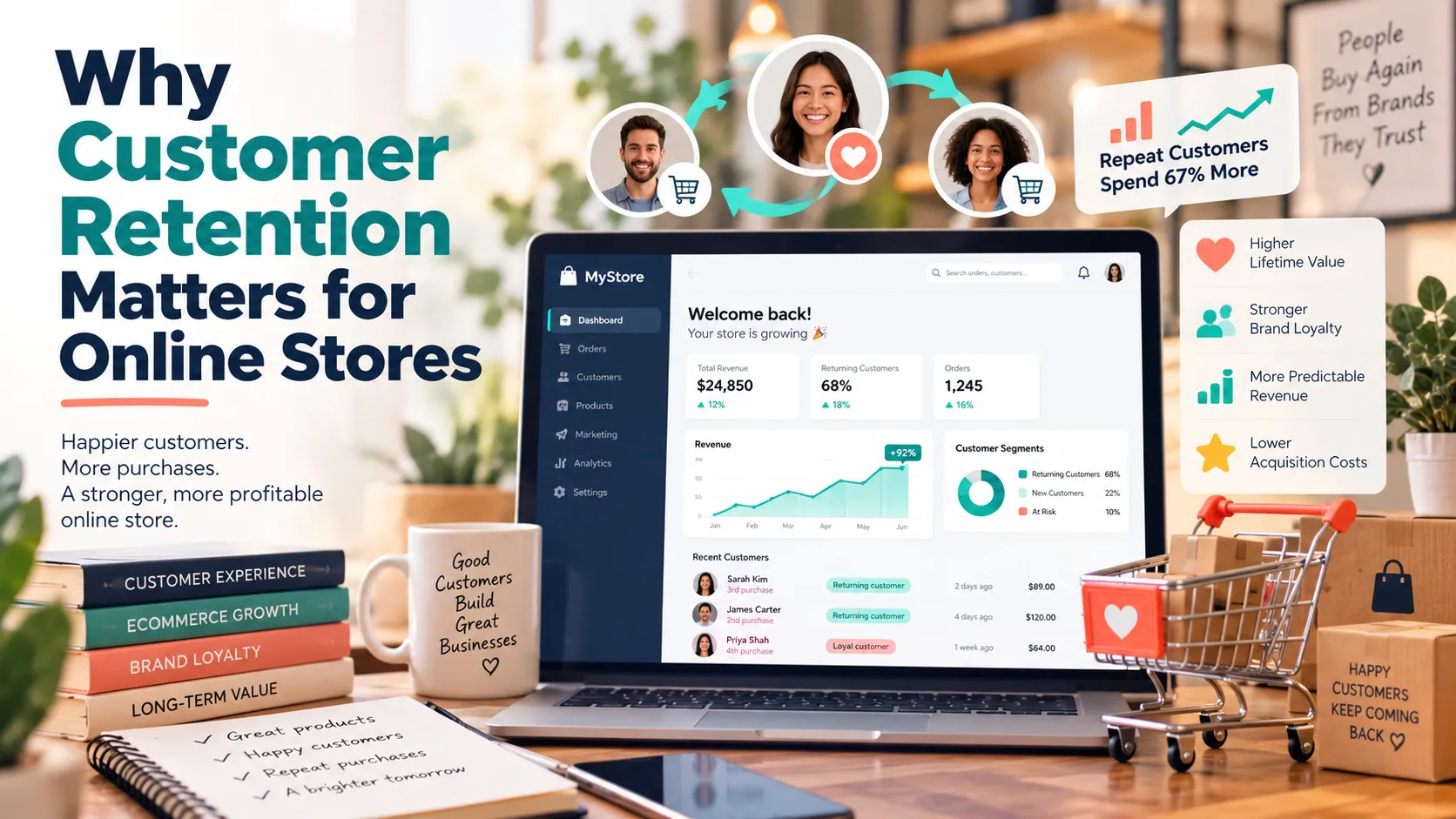
Winning a new customer is an important moment for any online store, but keeping that customer can be even more valuable over time. E-commerce businesses often put significant effort into attracting new shoppers through search, advertising, social media, and other acquisition channels. Yet growth becomes harder when customers make one purchase and never return.
Customer retention focuses on creating an experience that gives shoppers reasons to come back. It can strengthen customer relationships, encourage repeat purchases, increase lifetime value, and make revenue less dependent on constantly finding new buyers. For online stores trying to build sustainable growth, retention deserves just as much attention as acquisition.
What Is Customer Retention?
Customer retention is an online store’s ability to keep existing customers engaged and encourage them to make additional purchases over time. Retention begins after the first order, but it includes much more than sending another promotion. It can involve customer service, personalized communication, loyalty programs, useful content, product recommendations, email campaigns, and a smooth post-purchase experience.
A strong retention strategy keeps the relationship active between purchases so customers continue remembering the store and the value it provides. The goal is to turn a single transaction into a longer customer relationship.
Repeat Customers Create More Long-Term Value
A first-time customer is still learning whether they can trust an online store. They may have questions about product quality, shipping, returns, customer service, and the overall buying experience. A returning customer already has some of those answers.
If the first experience was positive, there is usually less uncertainty the next time they shop. They already understand the products, know what the checkout process is like, and have an idea of what to expect after ordering. As customers continue purchasing, the total value of that relationship can grow.
This is why customer lifetime value is such an important retention metric. Rather than looking only at revenue from one order, it considers the value a customer can create throughout their relationship with the store.
Retention Reduces Dependence on Constant Acquisition
Acquiring customers is necessary, but relying entirely on new customers can make growth expensive and unpredictable. Advertising costs can change. Search competition can increase. Social platforms can adjust their algorithms. A campaign that performs well one month may not deliver the same results the next. Existing customers provide another source of revenue.
That does not mean acquisition should stop. Instead, acquisition and retention should work together. Channels such as paid media can introduce new shoppers to the store, while retention efforts can continue developing the relationship after the first purchase. Getting more value from customers already acquired can help create a healthier balance between new and repeat sales.
Personalization Makes Customers Feel Understood
Customers do not all have the same interests, needs, or purchase history. Someone who regularly purchases skincare products should not necessarily receive the same recommendations as a customer interested in fitness accessories. Treating every shopper identically can make marketing feel irrelevant. Personalization allows stores to use customer behavior to create more useful experiences.
This can include:
- Product recommendations based on past purchases
- Emails based on browsing activity
- Replenishment reminders
- Birthday or milestone messages
- Offers based on customer interests
- Recommendations related to previously viewed categories
Relevant communication can make it easier for customers to discover products they are genuinely interested in rather than receiving generic promotions.
Loyalty Programs Encourage Customers to Return
Loyalty programs give customers an additional reason to continue shopping with the same store. A program might reward customers with points, discounts, free shipping, early access, exclusive products, or other benefits based on their purchases and engagement.
The reward itself is only part of what makes the strategy effective. Good loyalty programs also make customers feel recognized for continuing to choose the brand. The best programs are simple to understand and provide benefits customers actually value. Complicated point systems or rewards that are difficult to redeem can create frustration instead of loyalty.
The Post-Purchase Experience Shapes Retention
Customer retention does not begin when a store sends its next promotional email. It begins immediately after checkout. Customers want clear order confirmations, accurate shipping information, easy tracking, responsive support, and straightforward return policies.
After delivery, stores can continue providing value through care instructions, setup guides, usage tips, review requests, or relevant product recommendations. Educational content marketing can also support retention by helping customers get more value from products they already own instead of communicating only when there is something new to sell. A positive post-purchase experience reassures customers that choosing the store was the right decision.
Customer Service Builds Trust
Problems are sometimes unavoidable in e-commerce. An order may arrive late. A customer may receive the wrong size. A product could become damaged during shipping. What happens next can have a major impact on whether that customer returns.
Fast, clear, and helpful customer service can turn a frustrating situation into a positive experience. Customers want to know that the business will respond when something goes wrong. Making support easy to access and resolving problems fairly can strengthen trust instead of allowing one issue to end the relationship.
A Better Shopping Experience Encourages Repeat Purchases
Even loyal customers can become frustrated by a difficult website. Slow pages, confusing navigation, complicated checkout steps, poor mobile layouts, or hard-to-find products create unnecessary friction.
Returning customers should be able to move through the shopping process easily. Effective website optimization can improve navigation, product discovery, mobile usability, checkout flow, and other parts of the buying experience that influence whether someone completes another purchase. Convenience matters because customers have many alternatives available online.
Measure Customer Retention Over Time
Retention should be measured rather than treated as a general feeling about customer loyalty.
Useful metrics can include:
- Customer retention rate
- Repeat purchase rate
- Purchase frequency
- Customer lifetime value
- Churn rate
- Average order value
- Time between purchases
- Returning customer revenue
These numbers help reveal how customer behavior changes over time. For example, a store may discover that customers return frequently after buying one product category but rarely return after purchasing another. That information can help guide follow-up campaigns, merchandising, and customer experience improvements.
Build Relationships That Go Beyond One Purchase
Customer retention is not about repeatedly pushing customers to buy more. It is about giving them reasons to continue choosing the store. Personalized experiences make communication more relevant. Loyalty programs reward repeat engagement. Strong customer service builds confidence. Helpful post-purchase content adds value after checkout. A smooth website makes future purchases easier.
When these elements work together, a one-time shopper has a better chance of becoming a repeat customer. For online stores, that stronger relationship can lead to more consistent sales, greater customer lifetime value, and a business that does not have to depend entirely on acquiring a new customer for every future order.
Responses
Join the conversation
Sign in to share your thoughts and interact with the author.
Sign In to Comment