In today's competitive digital landscape, a website is more than an online business profile. It is a platform for attracting customers, generating leads, building credibility, and supporting business operations.
As technology continues to evolve, businesses need websites that are faster, more secure, and capable of adapting to changing customer expectations. A basic template may work for some businesses, but growing organizations often require greater flexibility, advanced functionality, and better integration with their existing systems.
This is where professional web development services become valuable. From creating responsive websites to developing custom applications, the right development strategy helps businesses establish a strong digital foundation.
In this article, we'll explore why custom web development matters, the technologies shaping modern websites, and how businesses can choose the right development approach.
Understanding Modern Web Development
Web development involves building, maintaining, and improving websites and web applications.
Modern development goes beyond writing HTML, CSS, and JavaScript. It includes user experience design, backend architecture, database management, performance optimization, API integrations, and website security.
A professional web development agency combines these elements to create websites that support business objectives.
For example, an ecommerce business may require secure payment processing, inventory integrations, and personalized shopping experiences.
A healthcare organization may need appointment scheduling, accessible interfaces, and secure communication systems.
Similarly, a B2B company might benefit from CRM integration, lead generation forms, and customer management dashboards.
The development approach should reflect the needs of the business rather than relying on the same structure for every project.
Why Custom Web Development Matters for Businesses
Businesses increasingly depend on digital platforms to connect with customers and manage operations.
Custom development allows organizations to build functionality around their unique requirements.
1. Better Website Performance
Website performance has a direct impact on user experience.
Slow-loading pages, unnecessary scripts, and poorly optimized images can frustrate visitors and make websites difficult to navigate.
Professional developers use techniques such as image compression, caching, efficient code, and optimized hosting configurations to improve website performance.
Google's Core Web Vitals provide useful indicators for evaluating loading speed, responsiveness, and visual stability.
A well-optimized website makes browsing easier and creates a better foundation for organic search visibility.
2. Improved User Experience
A successful website should make it easy for visitors to find information and complete important actions.
Whether customers want to purchase a product, book a consultation, or contact a business, the experience should be simple and intuitive.
Custom development allows businesses to create user journeys that match their audiences and conversion goals.
Important elements include responsive navigation, clear calls to action, accessible interfaces, and organized content.
These improvements can reduce unnecessary friction throughout the customer journey.
3. Greater Scalability
As businesses grow, their website requirements change.
A small company may initially need a few service pages and a contact form. Over time, it may require customer portals, automated workflows, payment integrations, or advanced reporting tools.
Investing in custom web development services allows businesses to plan scalable digital solutions that can support expanding requirements.
A flexible architecture also makes it easier to introduce new features without rebuilding the entire platform.
4. Stronger Website Security
Website security is essential for protecting business information and maintaining customer confidence.
Websites that collect personal details or process transactions must implement appropriate security measures.
These may include HTTPS encryption, secure authentication, access controls, regular software updates, and vulnerability monitoring.
Developers should also follow secure coding practices and test applications before launch.
For businesses handling sensitive information, security should be considered throughout the development process rather than added afterward.
Custom Development vs. Template-Based Websites
One of the most common decisions businesses face is whether to use a prebuilt template or create a custom website.
Both approaches have advantages depending on the organization's needs.
Template-Based Websites
Template-based websites offer ready-made layouts and features.
They are often suitable for small businesses that need a straightforward online presence without complicated functionality.
Common benefits include faster implementation, lower initial costs, and simple content management.
However, excessive customization can become difficult when businesses need specialized integrations or workflows.
Custom Website Development
Custom development provides greater control over website architecture, design, functionality, and integrations.
Businesses can create features tailored to their operations, customer expectations, and growth plans.
For example, a logistics company may need a shipment tracking dashboard, while a professional services business may require automated appointment scheduling and CRM synchronization.
Custom solutions generally require more planning and development resources, but they can offer greater flexibility for organizations with complex requirements.
The right choice depends on budget, project scope, maintenance needs, and long-term business objectives.
Important Technologies Used in Web Development
Modern websites rely on different technologies depending on their complexity and intended functionality.
Frontend Technologies
Frontend development focuses on the visual and interactive elements users experience.
Common technologies include HTML, CSS, JavaScript, React, Vue, and Next.js.
These technologies help developers create responsive layouts, interactive interfaces, and dynamic website experiences.
Backend Development
Backend systems manage server-side processes, business logic, authentication, and data operations.
Technologies such as Node.js, PHP, Python, and Laravel support different types of website and application development.
The most suitable backend depends on the project's requirements, infrastructure, and technical complexity.
Content Management Systems
Content management systems allow businesses to update website content without modifying code directly.
Platforms such as WordPress, Webflow, and other CMS solutions support content publishing and ongoing website management.
Businesses should select a CMS that balances usability, flexibility, security, and scalability.
API Integrations
APIs allow websites to communicate with external applications.
For example, a website can connect with a CRM platform, payment gateway, inventory management system, or email marketing application.
These integrations help automate processes and improve information sharing across business systems.
How Website Development Supports SEO
Search engine optimization and web development work together to improve website accessibility and search visibility.
A technically optimized website helps search engines discover, crawl, and understand its content.
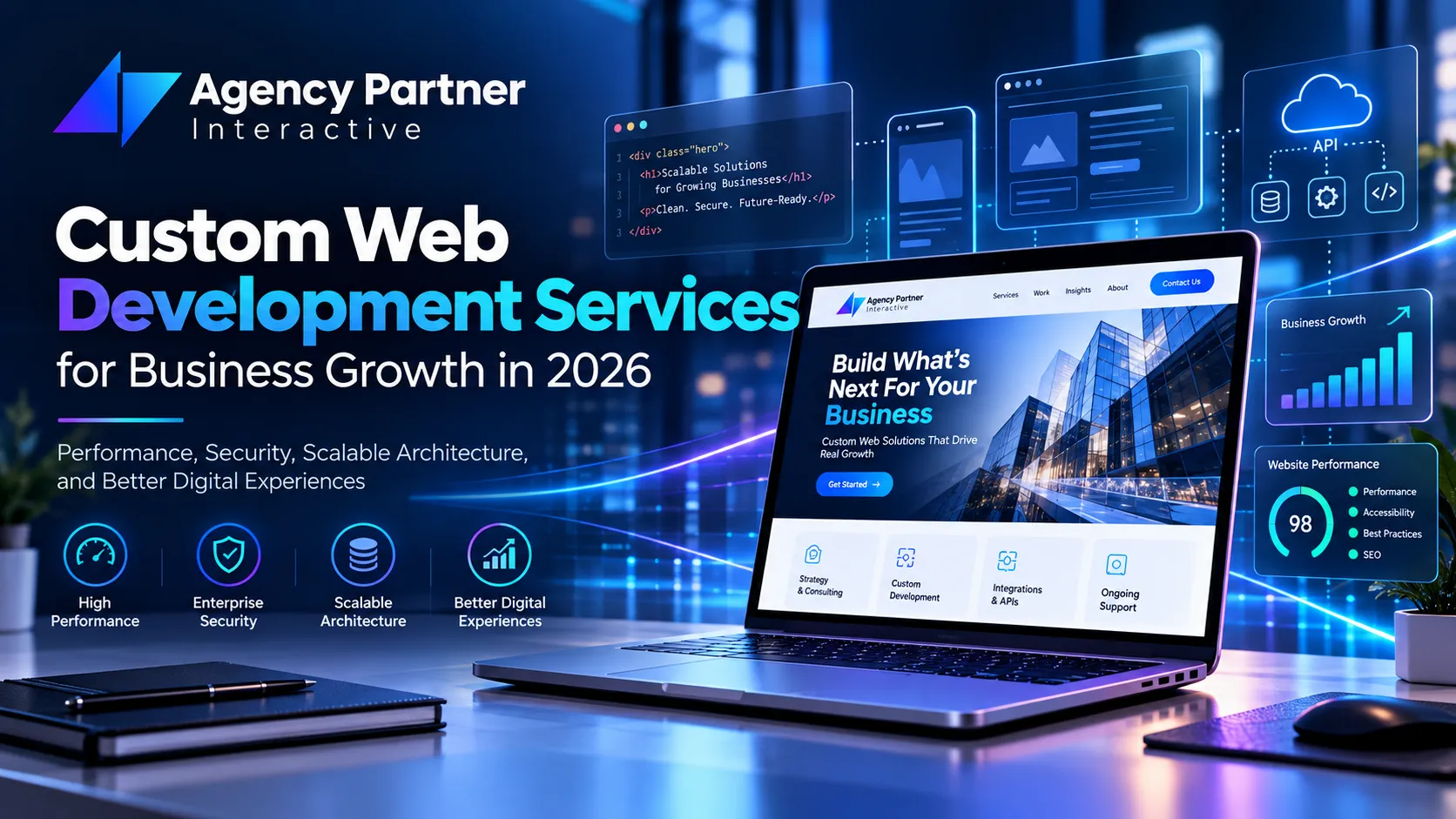
Professional website development services should consider technical SEO throughout the development lifecycle.
Important technical elements include:
- Clean and descriptive URL structures
- Mobile-friendly website layouts
- XML sitemaps
- Canonical tags
- Structured data where appropriate
- Optimized website loading speeds
- Proper heading structures
- Internal linking between relevant pages
- Correct indexing configurations
- Accessible and organized content
These practices create a foundation for search engine optimization.
However, technical improvements alone cannot guarantee higher rankings. Content quality, search intent, relevance, and competition also influence organic visibility.
Businesses should align website development with their broader SEO and content marketing strategies.
The Growing Role of AI in Website Development
Artificial intelligence is becoming increasingly relevant to modern website functionality.
Businesses are exploring AI-powered tools to automate customer support, improve product discovery, and personalize digital experiences.
Some practical applications include:
- AI chatbots for customer inquiries
- Personalized content recommendations
- Intelligent website search
- Automated customer support workflows
- AI-assisted data analysis
- Recommendation engines for ecommerce platforms
For example, an online store may use AI to suggest products based on browsing behavior.
A service-based business may use an AI assistant to help visitors find relevant information or schedule appointments.
AI integrations should be implemented carefully, with attention to data privacy, reliability, performance, and customer experience.
The goal is to improve website functionality rather than introduce technology without a clear business purpose.
Why Businesses Need Ongoing Website Maintenance
Launching a website is only the beginning of its lifecycle.
Websites require regular updates, monitoring, and technical improvements to remain reliable.
Ongoing maintenance typically includes software updates, security patches, performance monitoring, backups, and compatibility testing.
Businesses may also need to introduce new features as their requirements change.
Without regular maintenance, websites can develop security vulnerabilities, broken functionality, and performance problems.
A structured maintenance strategy helps organizations protect their investment and keep their digital platforms operating effectively.
How to Choose the Right Web Development Partner
Choosing a development partner requires evaluating more than pricing.
Businesses should consider technical expertise, industry experience, project management practices, and ongoing support.
Before selecting an agency, ask the following questions:
- Does the agency have experience developing similar websites or applications?
- Can the team build responsive and accessible interfaces?
- Does it provide custom frontend and backend development?
- Can it integrate third-party business applications?
- How does it approach website performance and security?
- Does it follow a structured testing and quality assurance process?
- Will the business retain ownership of its website and source code?
- Does it offer support and maintenance after launch?
Understanding these factors can help businesses choose a partner that supports both immediate project requirements and future growth.
Building Better Digital Experiences With Agency Partner Interactive
Agency Partner Interactive provides website design, web development, ecommerce development, custom software solutions, and digital marketing services.
The company's development approach combines strategy, user experience, performance, and scalable technology.
Its capabilities include custom websites, content management systems, web applications, ecommerce platforms, and third-party integrations.
Through a combination of design and development expertise, the company works with businesses seeking modern digital solutions that support customer engagement and operational efficiency.
Businesses considering custom website development services can evaluate Agency Partner Interactive's capabilities to determine whether they align with their project requirements.
A successful development project should focus on building a reliable platform that is easy to manage, secure, and capable of supporting future expansion.
Final Thoughts
In 2026, web development plays an important role in how businesses operate, attract customers, and deliver digital experiences.
Modern websites need to combine performance, security, responsive design, scalable architecture, and reliable integrations.
While template-based websites remain suitable for simpler projects, custom development offers flexibility for businesses with more advanced requirements.
By investing in thoughtful website development and choosing the right technical partner, organizations can build digital platforms that support customer satisfaction, operational efficiency, and long-term business growth.
Responses
Join the conversation
Sign in to share your thoughts and interact with the author.
Sign In to Comment