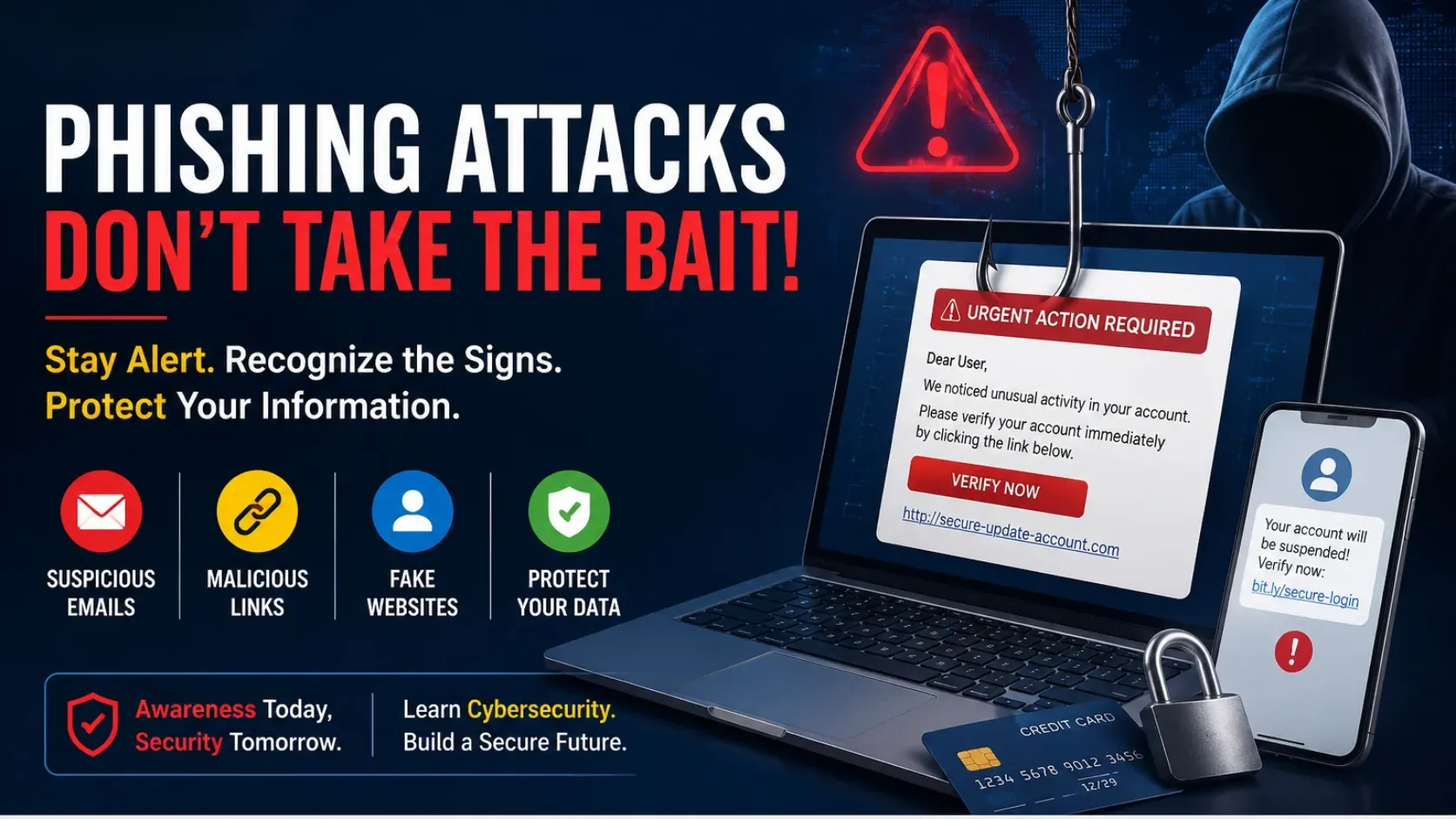
The internet has become an essential part of everyday life. People use it for banking, shopping, communication, education, and business. However, as online activities increase, cyber threats are also becoming more common. One of the most widespread cybersecurity threats is phishing. It is a type of cyberattack that tricks people into revealing sensitive information through fake emails, messages, phone calls, or websites.
Understanding how phishing works and learning how to recognize suspicious activity can help individuals and organizations stay safer online.
What Are Phishing Attacks?
Phishing is a social engineering technique in which cybercriminals pretend to represent trusted organizations, companies, or individuals. Their main objective is to steal confidential information such as passwords, credit card numbers, banking details, and login credentials.
Attackers often create convincing messages that encourage victims to take immediate action. For example, an email may claim that an account has been temporarily blocked and ask the user to verify their identity through a provided link. The link may lead to a fake website designed to collect personal information.
Common Types of Phishing Attacks
Phishing can happen through several communication channels. Some common types include:
1. Email Phishing
Attackers send fraudulent emails that look like genuine messages from banks, online platforms, or service providers. These emails often contain malicious links or attachments.
2. Spear Phishing
Unlike general phishing campaigns, spear phishing targets specific individuals or organizations. Attackers may use personal or professional information to make their messages appear more believable.
3. Smishing
Smishing involves phishing through SMS or text messages. Victims may receive fake delivery notifications, payment alerts, or account verification requests containing suspicious links.
4. Vishing
Vishing uses phone calls to manipulate victims. Criminals may pretend to be bank employees, technical support representatives, or government officials to obtain confidential details.
5. Website Spoofing
Cybercriminals create fake websites that closely resemble legitimate websites. When users enter their login information, the details may be captured by attackers.
Warning Signs of a Phishing Attempt
Recognizing phishing messages before interacting with them is an important cybersecurity skill. Watch for these common warning signs:
- Unexpected emails requesting passwords or financial information.
- Messages that create panic or demand immediate action.
- Incorrect spelling or unusual sender email addresses.
- Suspicious website links that do not match official domains.
- Unexpected attachments from unknown sources.
- Offers, rewards, or prizes that seem unrealistic.
Always examine a message carefully, even when it appears to come from a familiar organization.
How to Protect Yourself from Phishing
Following basic cybersecurity practices can significantly reduce the risk of becoming a phishing victim.
Verify the sender: Check the sender's email address and confirm unusual requests through an official communication channel.
Avoid suspicious links: Do not click unexpected links. Instead, visit the organization's official website by entering its address directly into your browser.
Use strong passwords: Create unique passwords for different accounts and consider using a trusted password manager.
Enable multi-factor authentication: MFA adds another layer of protection, making it harder for attackers to access accounts using stolen passwords alone.
Keep software updated: Regularly update your operating system, browser, and security applications to reduce exposure to known vulnerabilities.
Report suspicious messages: Inform your email provider, organization, or security team when you receive suspected phishing communications.
What Should You Do If You Become a Victim?
If you accidentally click a suspicious link or share sensitive information, act quickly. Change the affected password using the official website, enable multi-factor authentication, and review recent account activity. If banking information was exposed, contact your bank immediately. Report workplace-related incidents to your IT or cybersecurity team.
Quick action can help limit potential damage and prevent further unauthorized access.
Build Your Cybersecurity Knowledge
Phishing attacks continue to evolve, making cybersecurity awareness important for everyone. Learning about social engineering, online threats, network security, and ethical hacking can help people develop practical skills for identifying and responding to cyber risks.
For those interested in developing cybersecurity knowledge and exploring professional learning opportunities, visit Cyber Security Institute.
Cybersecurity starts with awareness. Verify before you trust, think before you click, and make online safety a daily habit.
Stay Informed. Stay Alert. Stay Secure.
Responses (0)
Join the conversation
Sign in to share your thoughts and talk with the author.
Sign in to respondNo responses yet. Be the first to share your thoughts!