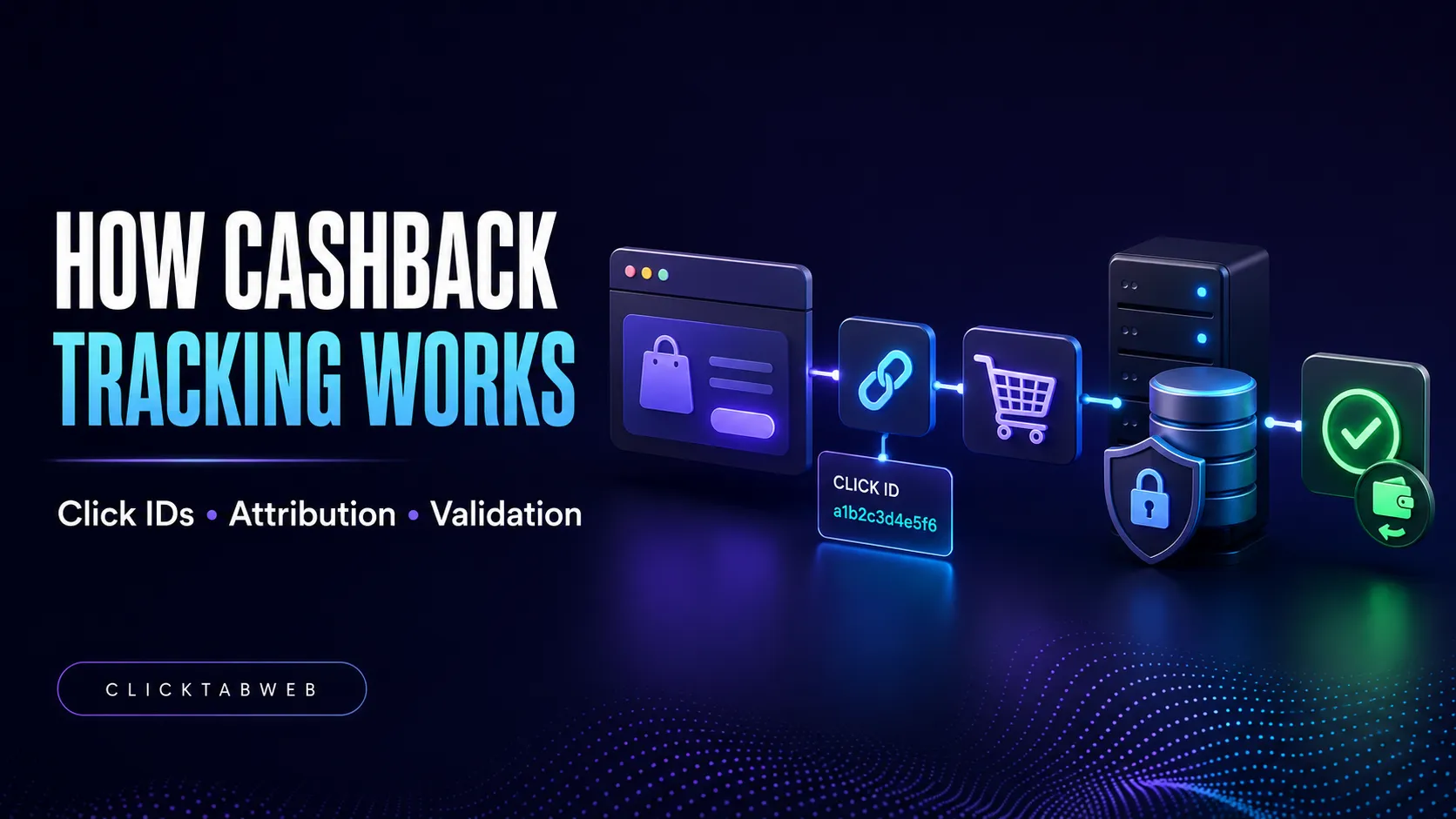

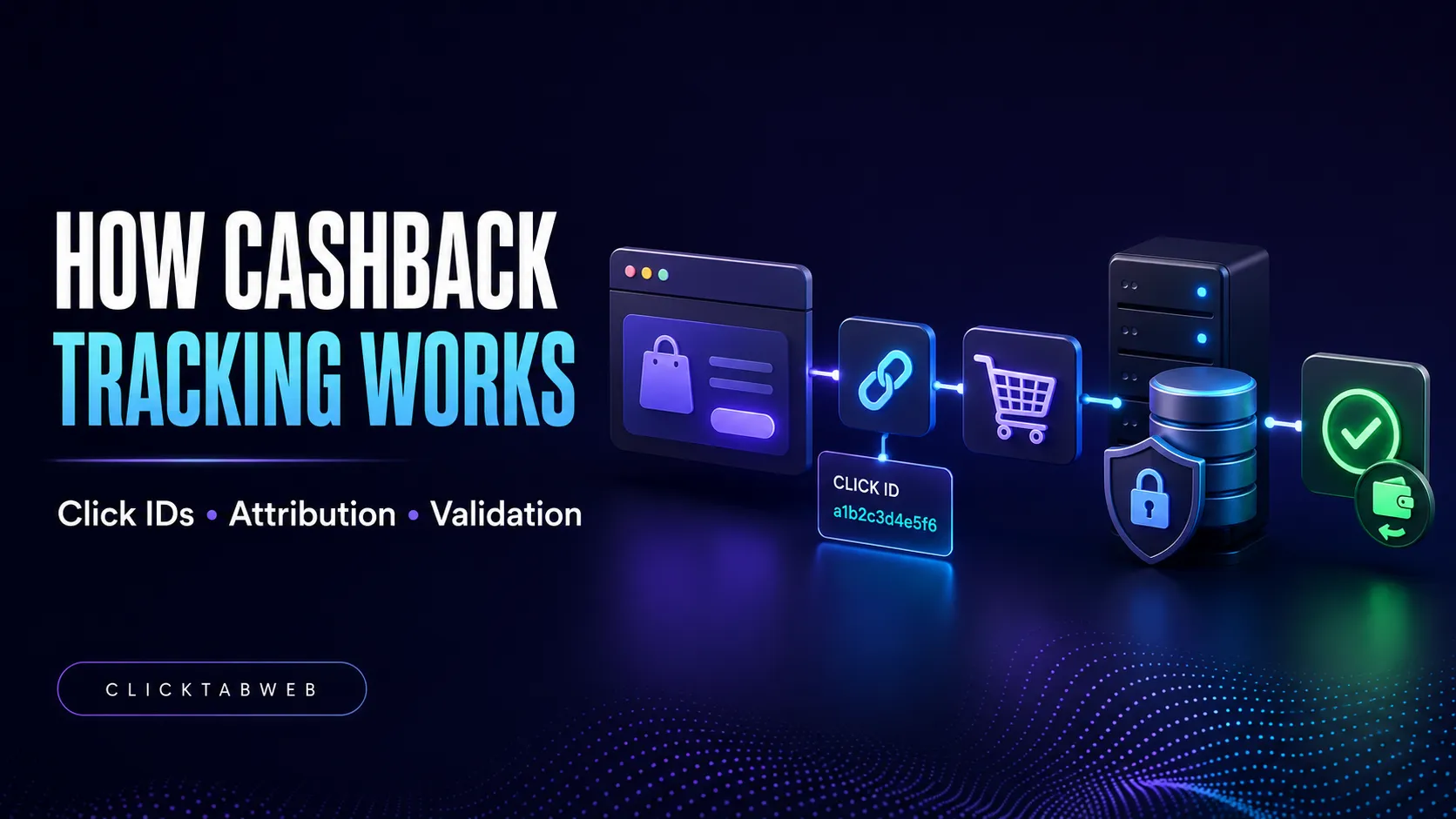
Online cashback looks simple from the outside. A shopper clicks an offer, buys something and eventually receives a reward. Behind that short journey, however, several systems have to agree on what happened, who referred the customer and whether the purchase still qualifies after cancellations or returns.
For developers, the interesting part is not the coupon displayed on the screen. It is the attribution pipeline working quietly behind it.
This article walks through that pipeline, from the first outbound click to the final cashback confirmation.
The Journey Begins With a Tracked Link
When a shopper clicks a store offer, the link usually does not take them directly to the merchant. It first passes through a redirect service.
That service performs a few quick tasks:
- Creates a unique click identifier
- Records the destination merchant
- Stores the timestamp
- Associates the click with a logged-in account or anonymous session
- Adds the required attribution parameters
- Redirects the shopper to the merchant
A simplified redirect endpoint might look like this:
app.get("/out/:merchant", async (req, res) => {
  const clickId = crypto.randomUUID();

  await clicks.insert({
    clickId,
    merchant: req.params.merchant,
    userId: req.user?.id ?? null,
    createdAt: new Date()
  });

  res.cookie("affiliate_click", clickId, {
    httpOnly: true,
    secure: true,
    sameSite: "Lax"
  });

  res.redirect(buildMerchantUrl(req.params.merchant, clickId));
});
A production system needs more validation and security, but the basic idea remains the same: generate an opaque identifier, store the event and redirect quickly.
The click ID should not expose an email address, phone number or predictable account number. A random identifier is safer and easier to rotate or expire.
How Attribution Survives the Shopping Session
Once the shopper reaches the merchant, the system needs a way to connect a future order with the original click.
Depending on the integration, attribution may rely on:
- A first-party cookie
- A query-string click ID
- A session identifier
- A logged-in customer account
- An affiliate-network identifier
- A server-side record shared during conversion reporting
Cookies remain common, but modern tracking systems should not depend on a single browser mechanism. Privacy settings, browser restrictions and application handoffs can interrupt the journey.
Server-side reporting is generally more reliable because the merchant’s backend reports the conversion directly. It is also easier to secure and validate than a browser-only confirmation pixel.
What Happens When the Customer Places an Order?
After checkout, the merchant or affiliate network sends a conversion event. This may happen through a browser pixel or a server-to-server callback.
A basic conversion payload could contain:
{
  "click_id": "8c1bdb77-2e31-4ea7-bfa4-4687c79a178e",
  "order_id": "ORDER-48391",
  "order_value": 2499,
  "currency": "INR",
  "status": "pending"
}
The platform then tries to match click_id with an earlier click record.
If the match succeeds, it can calculate the expected commission and shopper reward according to the offer rules. The reward generally enters a pending state rather than becoming immediately payable.
The system should treat order_id as an idempotency key. If the merchant sends the same callback twice, the database must update the existing conversion instead of creating two rewards.
Why Cashback Starts as Pending
A successfully tracked order is not necessarily a valid order. The customer may cancel it, return one item or use a coupon that is excluded from the affiliate programme.
This is why cashback systems usually work with a small state machine:
clicked → tracked → pending → confirmed → payable
                         ↘ rejected
During validation, the merchant may check:
- Whether payment was completed
- Whether the order was cancelled
- Whether products were returned
- Whether the purchased category was eligible
- Whether an approved coupon was used
- Whether the order was duplicated
- Whether the transaction followed the attribution rules
Validation can take time because many retailers wait until the return period ends.
A well-designed user interface should explain these states clearly. “Pending” should not look like “missing,” and “confirmed” should not automatically be presented as “paid.”
Attribution Rules Are Business Logic
Tracking an order is only half the job. The platform must also decide which click receives credit.
Many programmes use last-click attribution. If a shopper visits several promotional sources before buying, the most recent eligible click may receive the commission.
Other programmes may apply:
- First-click attribution
- A fixed attribution window
- Merchant-specific priority rules
- Different rules for websites and mobile applications
- Restrictions on coupon or voucher use
- Excluded categories or product types
These rules should not be scattered across controllers and background jobs. A better design keeps them in a dedicated policy layer.
function isEligible(conversion, policy) {
  return (
    conversion.ageInDays <= policy.attributionWindow &&
    !policy.excludedCategories.includes(conversion.category) &&
    policy.allowedCoupons.includes(conversion.coupon)
  );
}
Real-world policies are more complicated, but isolating them makes testing and future changes much safer.
Why Valid Purchases Sometimes Fail to Track
Even a genuine purchase can lose attribution. Common causes include:
- The shopper switches to another browser or device
- Tracking cookies are blocked or cleared
- Checkout moves from a website to a mobile application
- Another promotional link overwrites the original attribution
- An unapproved coupon changes the referring source
- The conversion callback arrives without a valid click ID
- The shopper waits beyond the attribution window
- A browser extension blocks the redirect or tracking request
A mature system needs a missing-cashback workflow. Support teams should be able to search by order ID, click ID, merchant and date without receiving more personal information than necessary.
Security Matters More Than It First Appears
A cashback platform processes order information and financial rewards, making it an attractive target for abuse.
Developers should consider:
- Random, non-sequential click identifiers
- Signed server-to-server callbacks
- HMAC verification
- Strict timestamp validation
- Idempotent conversion processing
- Rate limiting
- Duplicate-account detection
- Audit logs for status changes
- Role-based administrative access
- Encryption for sensitive records
Never trust an order value submitted by the browser. Commission calculations should use verified information from the merchant or affiliate network.
Administrative changes also need an audit trail. If someone manually changes a conversion from rejected to confirmed, the system should record who made the change, when it happened and why.
Build Privacy Into the Tracking Design
Attribution does not require collecting every possible detail about a shopper.
A privacy-conscious implementation should:
- Collect only the data required for attribution
- Use opaque identifiers
- Avoid storing raw payment information
- Separate account data from tracking events
- Apply clear retention periods
- Explain cookie usage
- Honour consent choices
- Restrict internal access
- Delete expired tracking records
The goal is to connect a click with an eligible order, not to build an unlimited profile of the shopper.
Data minimisation also reduces operational risk. Information that was never collected cannot be exposed in a breach.
The Shopper-Facing Experience
Most users should never need to understand click IDs, callbacks or attribution windows. They need a simple journey:
- Find an eligible offer.
- Read the terms.
- Continue to the retailer.
- Complete the order.
- See the transaction as pending.
- Receive confirmation after validation.
A shopper-facing service such as ClickTabWeb’s store and offer directory can make discovery simpler, while the underlying systems handle attribution and validation in the background.
Good product design explains what users can control. For example, staying in the same browser session, avoiding unrelated coupon websites and retaining the order confirmation can reduce tracking problems.
Monitoring the Attribution Pipeline
Tracking systems can fail silently, so monitoring is essential.
Useful operational metrics include:
- Outbound clicks by merchant
- Click-to-conversion rate
- Pending conversion volume
- Average validation time
- Rejection rate
- Duplicate callback rate
- Missing click-ID rate
- Manual claim volume
- Confirmed reward value
- Callback latency and failures
A sudden drop in conversion rate may indicate a broken redirect parameter or merchant integration. A jump in duplicate callbacks may reveal a retry problem. Monitoring these patterns helps teams detect issues before customers report them.
Final Thoughts
Cashback tracking is a distributed attribution problem disguised as a simple shopping feature.
A reliable implementation requires several parts to work together: fast redirects, opaque click IDs, durable conversion callbacks, idempotent processing, clear validation states and privacy-conscious storage.
The best systems hide this complexity from shoppers without hiding the status of their rewards. They make the customer journey feel simple while keeping the underlying evidence accurate, secure and auditable.
Responses (0)
Join the conversation
Sign in to share your thoughts and talk with the author.
Sign in to respondNo responses yet. Be the first to share your thoughts!