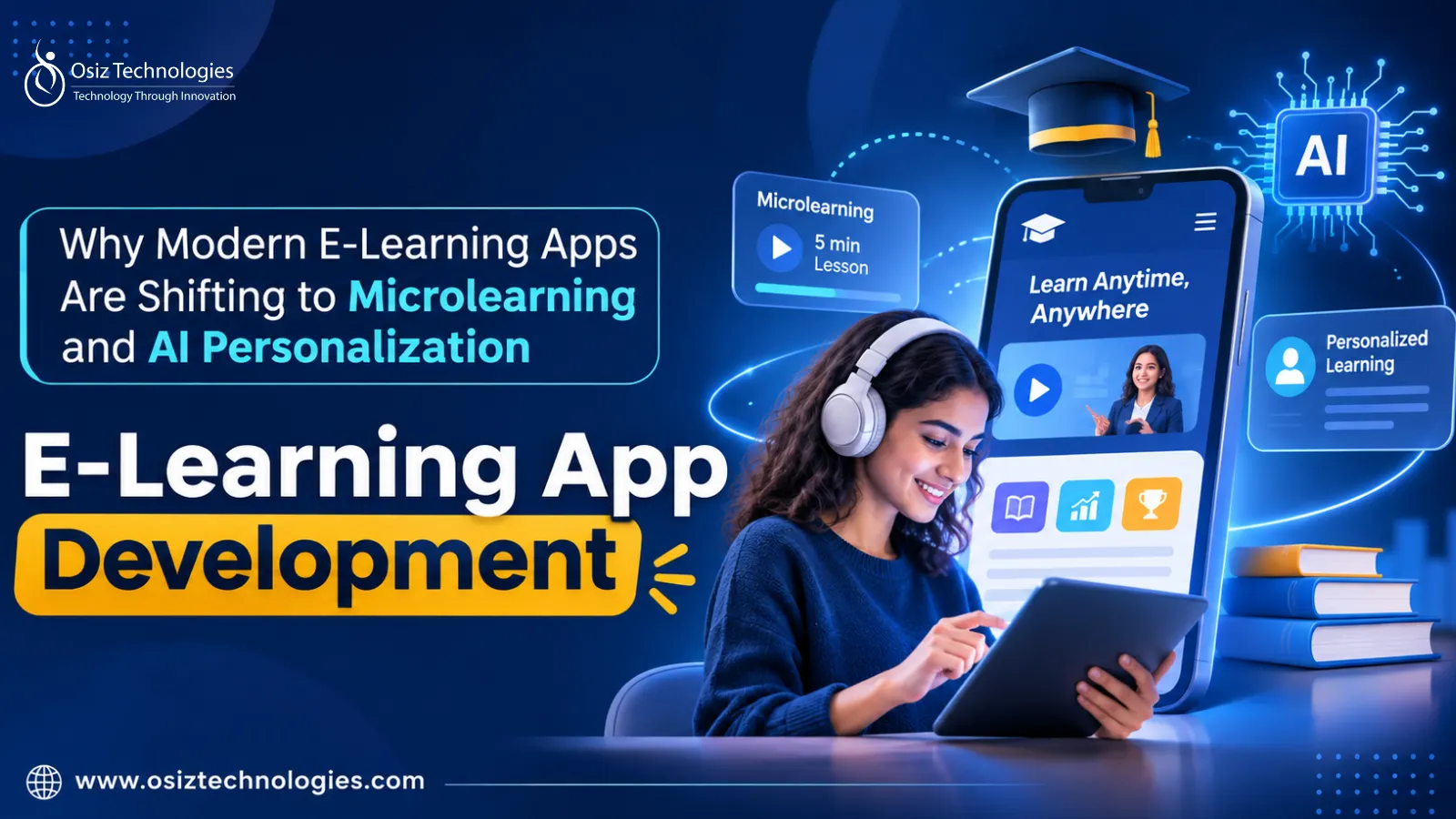

The way people learn online is changing. Long lessons and the same learning materials for everyone do not always fit into busy schedules or different learning needs. Today's learners prefer short, focused lessons that are easier to understand and revisit. This shift is influencing e-learning app development, where microlearning and AI personalization are helping businesses create more flexible and engaging digital learning experiences.
Why Microlearning Is Becoming Popular
Microlearning breaks complex subjects into smaller lessons that focus on one topic at a time. Instead of completing lengthy courses in one sitting, learners can watch a short video, read a quick explanation, or complete a small quiz whenever they have time.
This approach works well for students, working professionals, and people learning new skills alongside their daily responsibilities. Short lessons also make it easier to revise important concepts and track progress. For education businesses, microlearning creates opportunities to offer focused courses that match specific learner needs.
How AI Personalization Improves Learning Experiences
Every learner has a different pace, knowledge level, and area of interest. AI helps learning apps understand these differences by analyzing course activity, assessment results, and learning progress.
Based on this information, an app can recommend relevant lessons, suggest additional practice, and adjust learning paths. For example, if a learner struggles with a particular topic, the system can recommend simpler explanations or related exercises.
This makes learning feel more relevant instead of presenting the same content to everyone. It can also help learners stay motivated by showing clear progress and useful next steps.
Combining Microlearning with AI-Powered Features
Microlearning becomes more effective when supported by intelligent features. AI-powered recommendations can suggest the next short lesson, while automated quizzes help learners check their understanding immediately.
Progress dashboards allow users to see completed lessons and identify topics that need more attention. Notifications can also encourage learners to continue their courses without overwhelming them.
Together, these capabilities create a learning experience that is flexible, interactive, and easier to follow. Businesses can use them to improve course engagement and make their educational services more valuable.
Another important part of this shift is making learning accessible across devices and schedules. Learners should be able to pause a lesson on a phone and continue later on a laptop without losing progress. Businesses can also use feedback and course analytics to understand which lessons work well and where learners need support. By regularly improving content and recommendations, education providers can keep courses useful, encourage consistent participation, and build stronger relationships with learners as expectations evolve over time.
Building More Engaging E-Learning Apps
Microlearning and AI personalization are changing what learners expect from digital education. Businesses planning an e-learning app should focus on simple navigation, useful learning content, data security, and features that support different learning styles.
Osiz Technologies, an experienced app development company, helps businesses build customized e-learning solutions with modern technologies. By combining the right features with a learner-focused approach, businesses can create digital learning experiences that support engagement and long-term growth.
Responses (0)
Join the conversation
Sign in to share your thoughts and talk with the author.
Sign in to respondNo responses yet. Be the first to share your thoughts!