
Introduction
Cybersecurity is the practice of protecting computers, networks, applications, and sensitive information from digital threats. As individuals and businesses increasingly rely on technology, protecting digital assets has become an important part of everyday life. Cybersecurity helps prevent unauthorized access, reduce data loss, and maintain the confidentiality and availability of information.
Understanding how cybersecurity works helps beginners develop safer online habits and build a foundation for learning information technology and security.
How Does Cybersecurity Work?
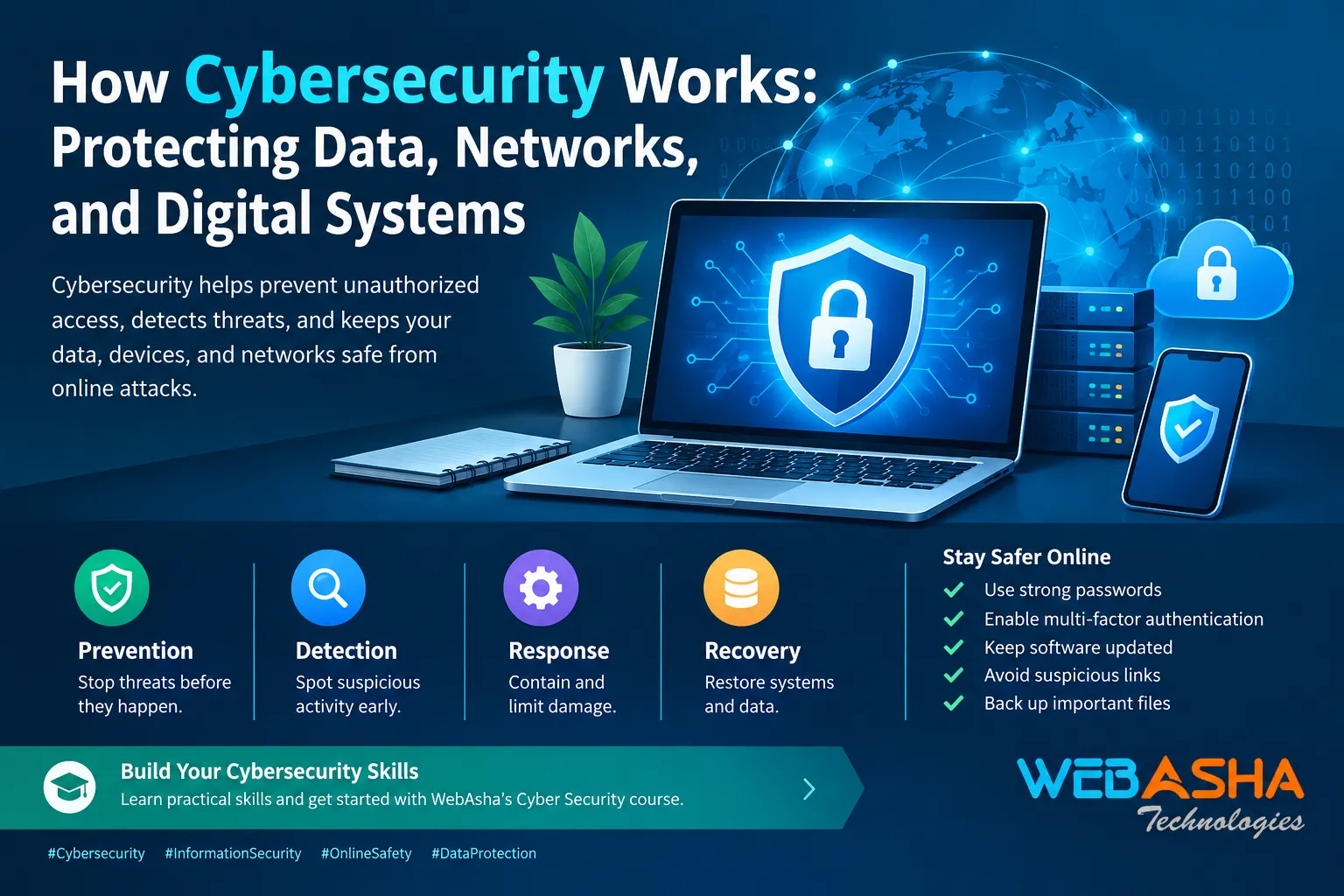
Cybersecurity combines technology, policies, and user awareness to protect digital environments. Its main activities are prevention, detection, response, and recovery.
1. Prevention
Prevention focuses on reducing vulnerabilities before attackers can exploit them. Firewalls help control network traffic, while antivirus and endpoint security tools can identify malicious software. Strong passwords, multi-factor authentication, and regular software updates also help reduce the risk of unauthorized access.
Organizations can strengthen prevention by limiting user permissions and providing security awareness training to employees.
2. Detection
Detection involves monitoring systems and networks for suspicious activity. Security tools can identify unusual login attempts, unexpected network traffic, and potentially malicious files. Security professionals review alerts and investigate events to determine whether they represent genuine threats.
Detecting suspicious behavior early can help reduce the potential impact of an attack.
3. Response
When a security incident occurs, organizations need a clear response process. Security teams investigate the incident, contain affected systems, block unauthorized access, and work to remove the threat. A well-planned response can help limit damage and prevent an incident from spreading across connected systems.
4. Recovery
Recovery focuses on restoring affected systems and data. Secure backups, documented recovery procedures, and system testing help organizations resume normal operations. Reviewing an incident afterward can also reveal weaknesses that need to be addressed.
Common Cybersecurity Threats
Digital systems face several types of threats:
- Phishing: Fraudulent emails, messages, or websites designed to steal credentials or personal information.
- Malware: Malicious software that may damage devices, collect information, or enable unauthorized access.
- Ransomware: Malware that encrypts files or restricts access while demanding payment.
- Password attacks: Attempts to guess, steal, or misuse login credentials.
- Social engineering: Manipulating people into sharing confidential information or taking unsafe actions.
Understanding these threats makes it easier to recognize warning signs and take appropriate precautions.
Essential Cybersecurity Best Practices
Individuals and organizations can improve security by following practical measures:
- Use strong, unique passwords for different accounts.
- Enable multi-factor authentication whenever possible.
- Install operating system and application updates promptly.
- Avoid suspicious links and unexpected attachments.
- Back up important files regularly.
- Use trusted security software and secure network connections.
- Verify unusual requests for passwords, payments, or confidential information.
Organizations should also apply access controls, monitor important systems, train employees, and maintain incident response plans.
Building Cybersecurity Skills
People interested in cybersecurity can begin by learning computer networking, Linux fundamentals, operating system security, and basic security tools. Hands-on practice in authorized labs helps learners understand vulnerabilities and defensive techniques in a controlled environment.
As their knowledge grows, learners can explore areas such as security operations, vulnerability assessment, incident response, and ethical hacking. Practical experience, consistent study, and responsible security practices are important for developing technical skills.
WebAsha Technologies provides cybersecurity training resources for learners interested in developing their IT and information security knowledge. Explore the WebAsha Cyber Security course for further information.
Conclusion
Cybersecurity is an ongoing process that combines prevention, detection, response, and recovery. By recognizing common threats and following effective security practices, individuals and organizations can better protect their data and digital systems. Learning cybersecurity fundamentals is a useful first step toward safer technology use and continued professional development.
Responses (0)
Join the conversation
Sign in to share your thoughts and talk with the author.
Sign in to respondNo responses yet. Be the first to share your thoughts!